What to pack, how to plan snan day, and the small things that make a first Kumbh Mela visit safe and comfortable.
A Kumbh Mela is unlike any other trip. Even well-travelled pilgrims are surprised by the scale—the walking, the crowds and the sheer energy. This checklist is based on what our coordinators see first-timers forget most often.
Before you leave home
- ID for everyone, including children. Carry originals and a printed copy.
- Printed stay address and a contact number in Hindi and English, in each person's pocket.
- Emergency contact card for children and elderly family members.
- Medicines for the whole trip, plus a small first-aid kit.
- Cash in small notes—digital payments work in most places, but networks slow down on snan days.
What to pack for Haridwar
- Warm layers for January–February mornings (5–8 °C at dawn), and lighter cotton for March–April.
- A towel and a quick-dry change of clothes in a waterproof bag for the snan.
- Comfortable walking shoes and slip-on sandals for the ghat.
- A small torch or headlamp for pre-dawn walks.
- A power bank.
On snan day
- Leave early. Walk to the ghat before dawn; diversions begin the previous evening.
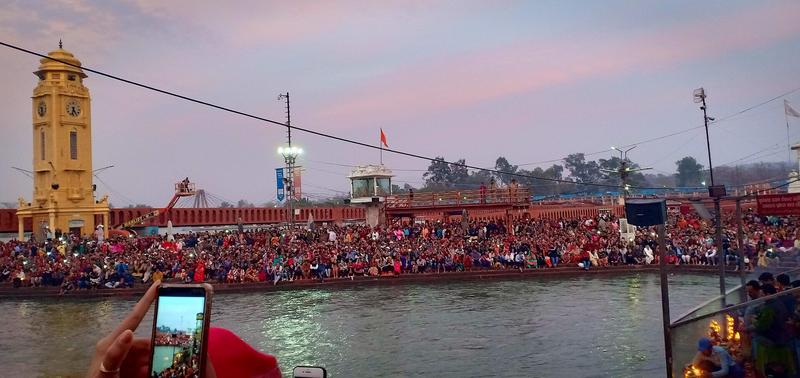
- Fix a meeting point. The clock tower at Har Ki Pauri is the classic choice. If someone gets separated, everyone goes there.
- Hold the chains. The Ganga flows fast at Har Ki Pauri; always hold the railings and chains in the water.
- Use the lost-and-found centres. The mela administration runs khoya-paya centres—note the nearest one.
- Do not carry valuables you do not need.
After the snan
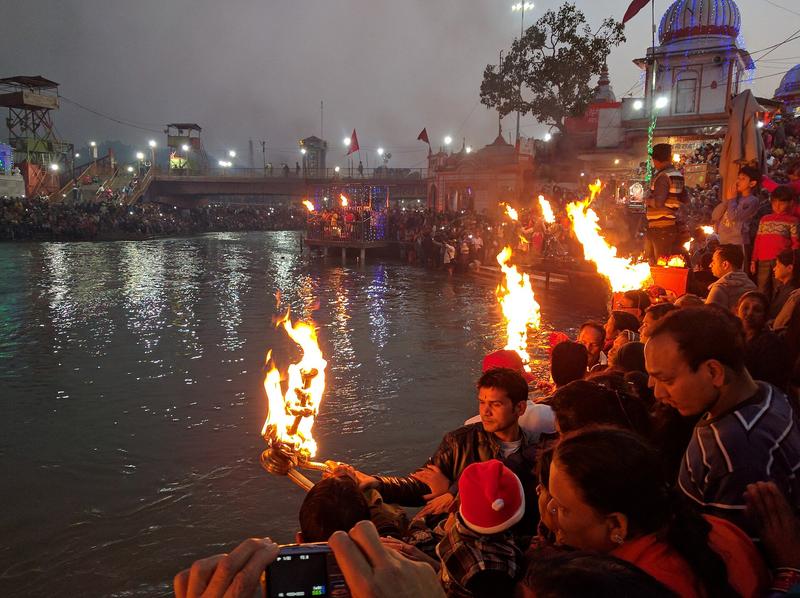
Rest in the afternoon, then return for the evening Ganga Aarti. Use non-snan days for Mansa Devi, Chandi Devi, Kankhal and Rishikesh.
Travelling with seniors
Choose a regular snan day rather than an Amrit Snan, book a stay within walking distance of the ghat, and ask us about wheelchairs and porters. A local coordinator who knows the permitted routes makes the biggest difference.
By KMII Travel Desk · Updated 12 Oct 2026