Planning your Prayagraj Ardh Kumbh 2031: the complete guide
Prayagraj holds the largest and most famous of all the Kumbh Melas. Every six years an Ardh Kumbh is held here, every twelve a Purna Kumbh, and every year a smaller Magh Mela fills the same sands. The next Kumbh is the Ardh Kumbh 2031. Its official dates have not yet been announced, but it is not too early to understand how the mela works and to plan your trip.
What we know about 2031
The Ardh Kumbh is expected around January to March 2031, centred on the month of Magh. The exact dates, the bathing days and the camp allotments will be announced by the authorities closer to the event. What is certain is the traditional shape of the mela:
- Paush Purnima marks the start of Kalpvas, the month-long vow of simple living by the river.
- Makar Sankranti is one of the first great bathing days.
- Mauni Amavasya is traditionally the most important, and most crowded, day of the Prayag Kumbh.
- Basant Panchami brings another major snan.
- Maghi Purnima ends the Kalpvas month.
- Maha Shivratri traditionally closes the mela.
Register your interest and we will share options as soon as dates are confirmed. Read what we know about the 2031 Ardh Kumbh.
The Triveni Sangam
Prayagraj is sacred because of the Triveni Sangam, the meeting of the Ganga, the Yamuna and, by tradition, the invisible Saraswati. You can see the confluence clearly: the Ganga's lighter water meets the Yamuna's darker, greener water.
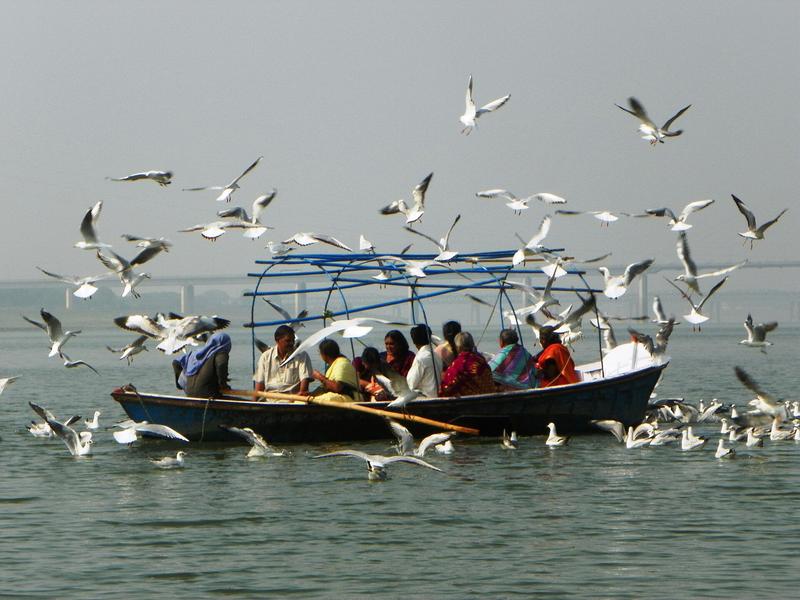
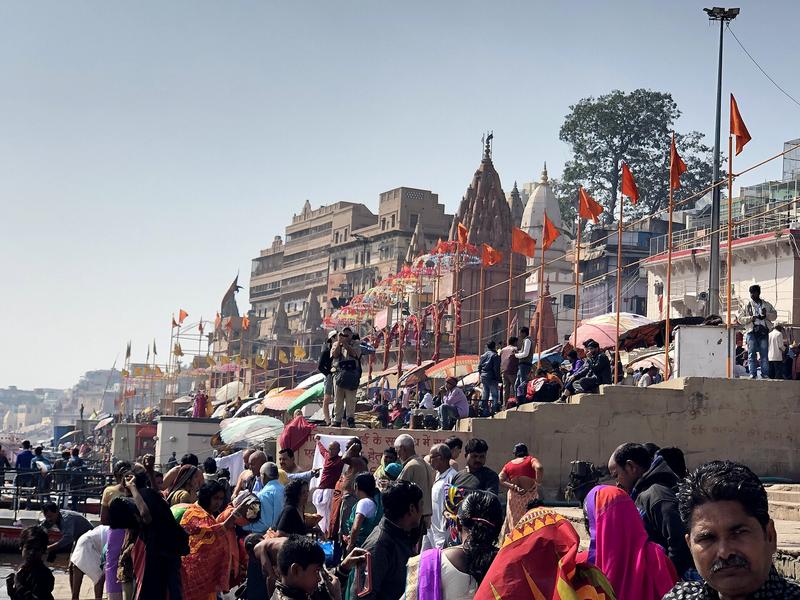
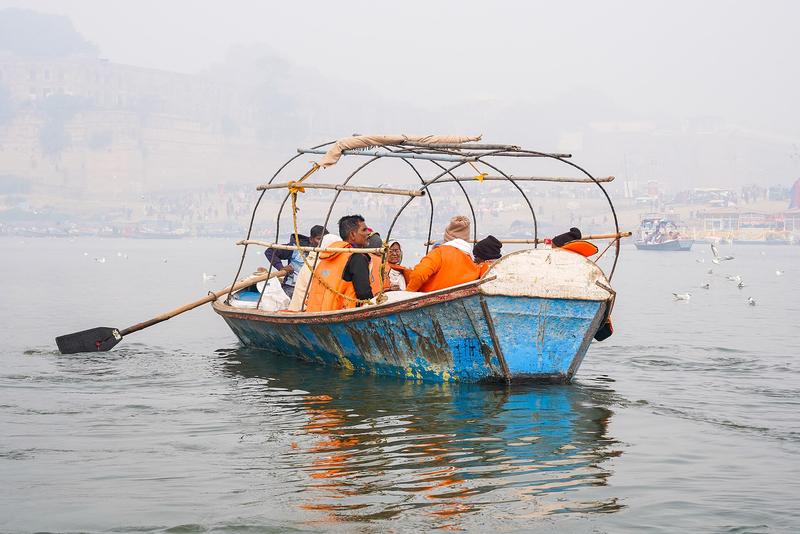
Most pilgrims take a boat to the confluence and bathe from platforms or in shallow water near it, rather than from riverbank steps as at Haridwar or Ujjain. Boatmen ferry pilgrims out from the ghats near the fort; during the Kumbh, boat services are regulated. Follow your boatman's instructions, because the current at the meeting point is stronger than it looks.
The tent city on the sands
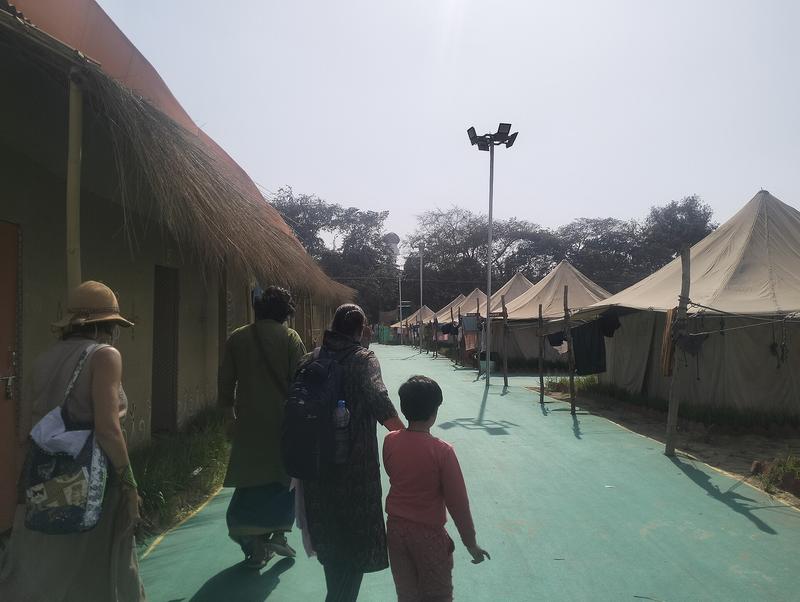
During the Kumbh, a vast temporary city rises on the sandbanks around the Sangam, which are exposed after the monsoon floods recede. It is divided into sectors, linked by pontoon bridges across the Ganga, with roads, electricity, water, hospitals, police stations and thousands of camps. Akharas, ashrams, kalpvasis and pilgrim camps each have their place. Finding your way is part of the experience; your coordinator will help you learn your sector, your nearest bridge and your bathing ghat.
Kalpvas: the heart of the Prayag Kumbh
For many families, the Prayag Kumbh is about Kalpvas: spending the month of Magh in a simple tent by the river, bathing each day, listening to katha and living with restraint. Some families have done it for generations. Our Kalpvas Package and Kalpvas tents make it possible for anyone to observe it comfortably. Read what is Kalpvas? to understand the tradition.
The cold: planning around it
January nights on the Sangam sands are cold and damp, often near freezing, with thick fog in the mornings.
- Choose a heated stay: our Luxury Camp and Deluxe Camp cottages offer heaters or extra blankets.
- Pack thermals, woollen socks, a cap and a shawl, and a change of warm clothes after your snan.
- Keep travel plans flexible: fog can delay flights and trains in January.
Prayagraj beyond the Sangam
Plan time for the city itself:
- Bade Hanuman temple, near the Sangam, famous for its reclining image of Hanuman;
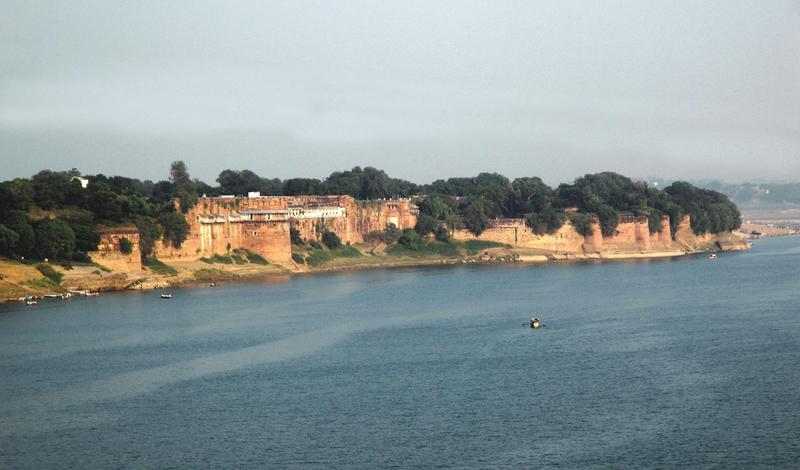
- Akbar's Fort on the riverbank, with the Akshayavat, the "indestructible" banyan tree of legend, inside;
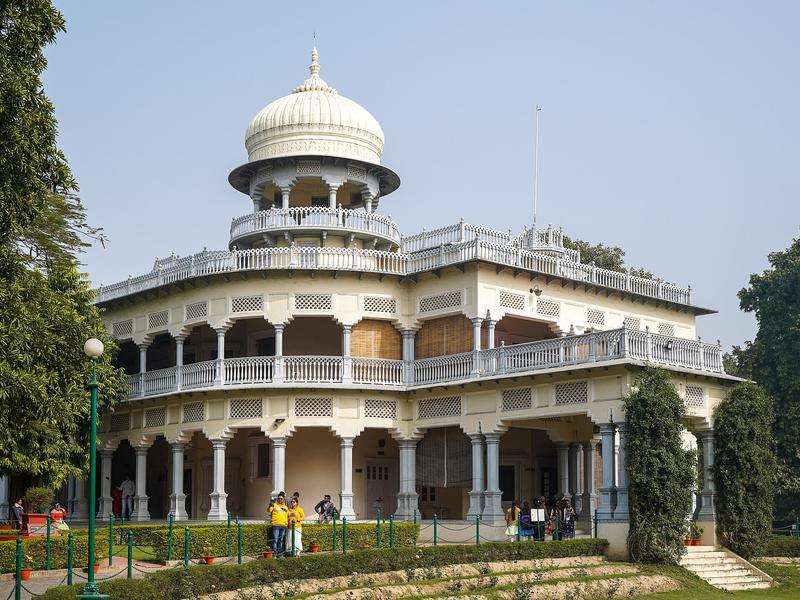
- Anand Bhavan, the former Nehru family home, now a museum;
- Khusro Bagh, a walled Mughal garden with sandstone tombs.
Where to stay
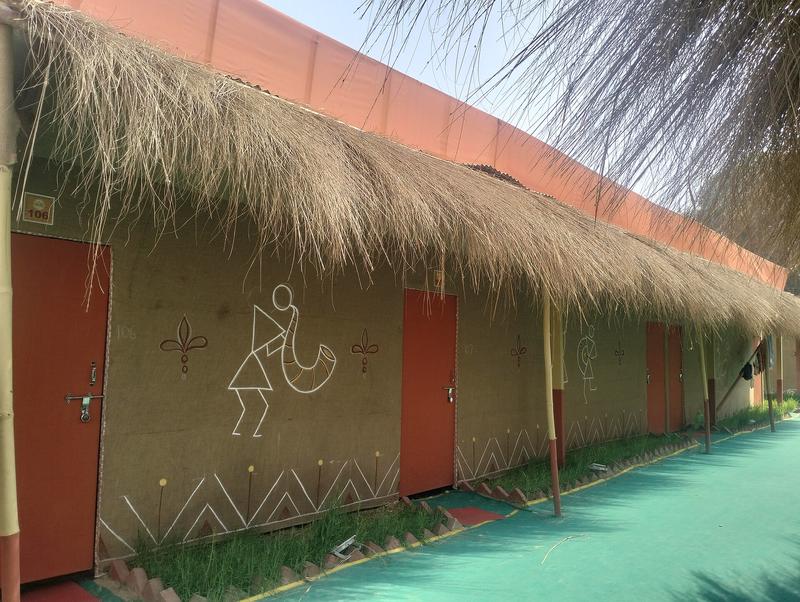
During the Kumbh, staying in the mela is the best way to reach the Sangam on bathing mornings. We offer:
Sectors are allotted each season, so we confirm your camp's sector and photos before you pay.
Sample itineraries
- 2–3 days: arrive, Sangam aarti, boat to the confluence for your snan, Bade Hanuman and the fort (package).
- 6 days: add Varanasi, with the Ganga Aarti and Kashi Vishwanath, and Ayodhya, with Ram Mandir darshan (package).
- A full month: observe Kalpvas from Paush Purnima to Maghi Purnima.
Getting there
Prayagraj Junction is one of the busiest railway stations in northern India, with trains from Delhi, Mumbai, Kolkata and most major cities; special Kumbh trains usually run on major bathing days. Prayagraj also has an airport with domestic flights, and Varanasi's airport is about 120 km away. During the Kumbh, vehicle access to the mela is controlled, and shuttle services run from parking areas.
What affects the cost
Kumbh rates change with dates and availability, and 2031 camp allotments are not yet known. Your budget will depend on your bathing day (Mauni Amavasya is the most in demand), your stay category and heating, the number of nights and travellers, and whether you observe Kalpvas or add Varanasi and Ayodhya. Every trip is quoted for your exact dates.
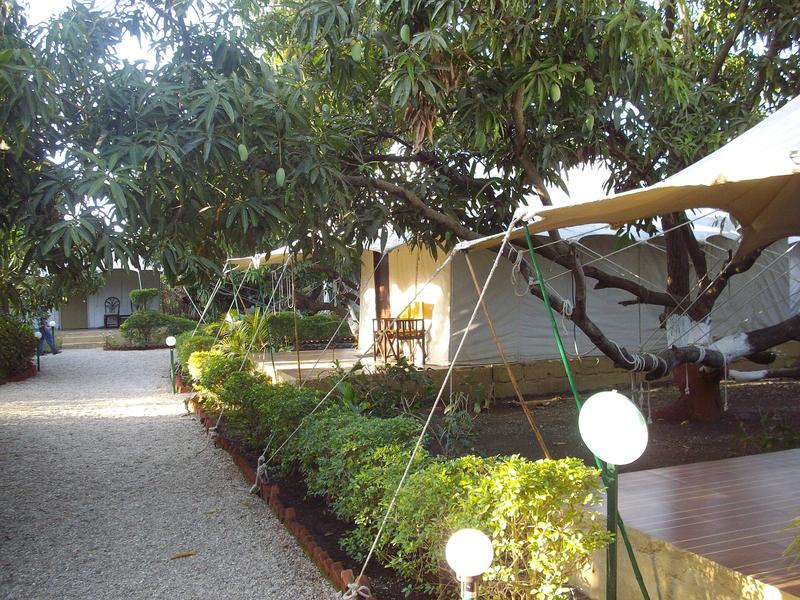 Luxury Camp