About the Kumbh Kalpvas Package
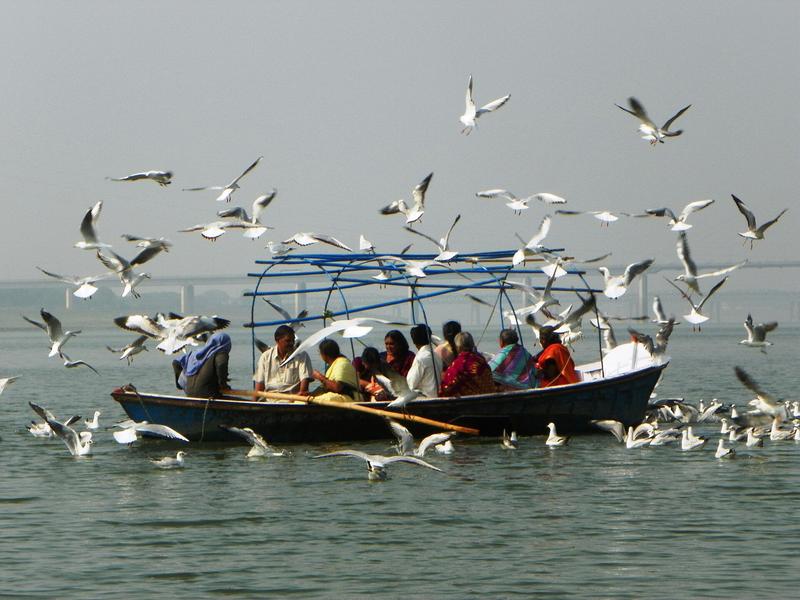
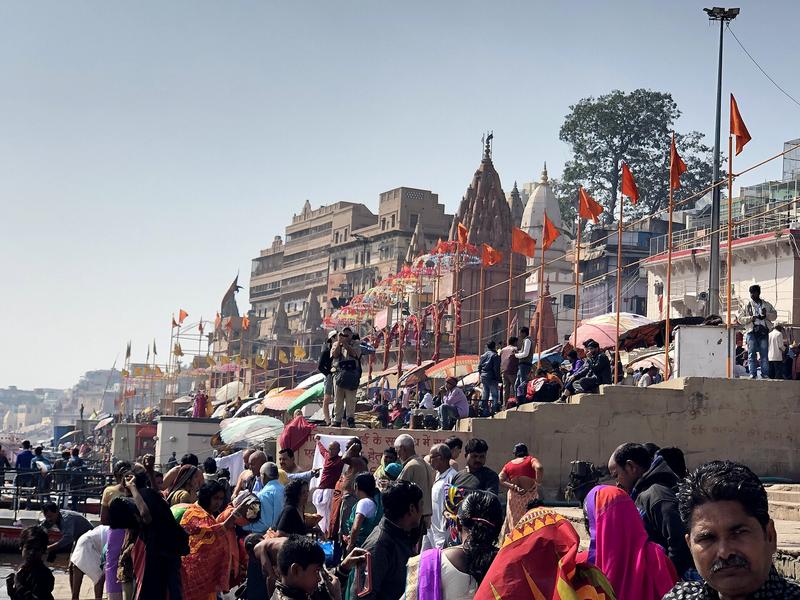
Kalpvas is one of the oldest traditions of the Prayag Kumbh. For the month of Magh, from Paush Purnima to Maghi Purnima, devotees known as kalpvasis leave their homes and live simply on the banks of the Sangam. They bathe in the river each day, listen to katha and satsang, pray, serve and live with restraint. The month is believed to bring the merit of a lifetime of devotion.
Many families have kept Kalpvas for generations, returning to the same camp and the same purohit year after year. This package makes it possible for anyone to observe it with dignity and comfort: a weatherproof Kalpvas tent close to the river for the whole month, two sattvik meals a day, daily satsang and a camp with security and a medical room.
Who this package suits
- Kalpvasis, whether continuing a family tradition or observing Kalpvas for the first time.
- Couples and retired devotees who wish to dedicate a month to spiritual life.
- Families who want to accompany an elderly parent observing Kalpvas.
Read what is Kalpvas? for the meaning and history of the tradition.
When it takes place
Kalpvas follows the lunar calendar, from Paush Purnima to Maghi Purnima. During the Ardh Kumbh 2031, expected around January to February 2031, this month falls inside the Kumbh, which makes it especially significant. Official dates have not yet been announced. Register your interest now and we will confirm your tent as soon as dates and camp allotments are known.
Kalpvas is also observed every year during the Magh Mela, and we can arrange it outside the Kumbh as well.
How the month unfolds
Paush Purnima: arrival and sankalp. You arrive and settle into your tent. With the camp's purohit, you take the sankalp, the vow that begins your Kalpvas.
The Kalpvas month. Each day follows a simple rhythm:
- Snan in the Sangam, usually early in the morning;
- prayer and puja, alone or with the camp;
- katha and satsang in the camp's pandal;
- seva and quiet time;
- simple sattvik meals.
Traditionally, many kalpvasis eat only once a day, sleep simply and keep a strict routine. Our package provides two meals a day, and you are free to keep whatever discipline you choose.
The major bathing days. The Kalpvas month includes some of the most important days of the Kumbh, such as Makar Sankranti, Mauni Amavasya and Basant Panchami. The camp makes special arrangements on these days, when crowds at the Sangam are at their largest.
Maghi Purnima: conclusion. A final snan concludes your Kalpvas, and you depart.
Where you stay
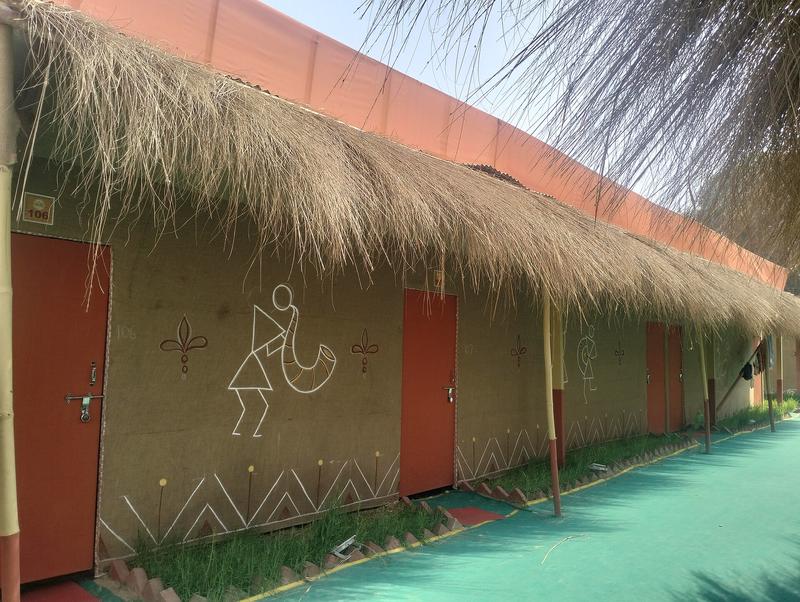
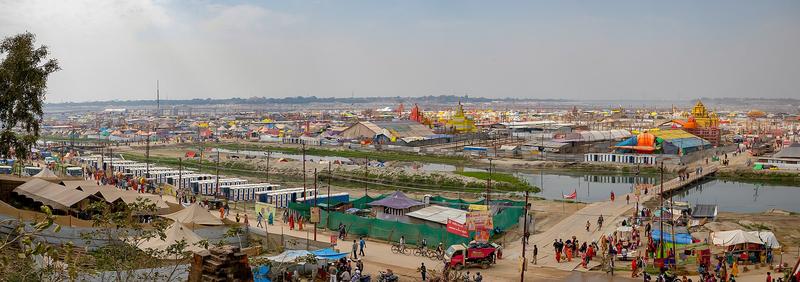
You stay for the whole month in a Kalpvas tent: weatherproof, with bedding and warm blankets, close to the river, with clean shared bathrooms and a satsang pandal in the camp. Family tents for three or four people are also available. Nights on the Sangam sands in January are cold and damp, so we provide extra blankets.
If you would like more comfort for an elderly kalpvasi, we can arrange a cottage with an attached bathroom in a Deluxe Camp instead. We confirm the camp, its sector and photos before you pay.
What is included
- A Kalpvas tent for the full period
- Two sattvik meals a day
- Bedding and blankets
- Camp security and a medical room
- Daily katha and satsang in the camp
Not included: travel to Prayagraj, puja and daan, and personal expenses. Family members can visit during the month; visits and extra nights for visitors can be arranged.
How the price is worked out
This package is priced on request. Your quote depends on the type of tent (for two, or a family tent), the number of people, any shorter-stay arrangement, and any upgrades such as an attached bathroom. Because Kalpvas camps are allotted for the season, we confirm the exact camp and price once allotments are known, always in writing before you pay.
Preparing for Kalpvas
- Warm clothing: thermals, shawls, woollen socks and a cap. Mornings by the river are bitterly cold.
- Simple, practical clothes for daily bathing, and a few sets that dry quickly.
- Personal puja items, a small lamp, a mala and your own scriptures if you wish.
- All regular medicines for the full month, with prescriptions.
- A torch, a water bottle and a small lockable bag.
The traditional rules of Kalpvas
Kalpvas has been observed for centuries, and the Puranas and later texts describe its discipline. Families differ in how strictly they follow it, but the traditional practices include:
- Bathing in the Sangam every day, often more than once;
- eating simply, traditionally once a day, and avoiding certain foods;
- sleeping on the ground or on a simple bed;
- speaking truthfully, avoiding anger and keeping a calm mind;
- daily worship, japa and listening to katha;
- charity and seva to sadhus and other pilgrims;
- not leaving the mela area during the month.
Many kalpvasis also plant barley near their tent at the start of the month, and offer it at the end. Your camp's purohit will guide you through the customs your family follows.
Supporting an elderly kalpvasi
Most kalpvasis are older devotees, and families often worry about a parent spending a month in a tent in the cold. A few steps help:
- Upgrade to a cottage with an attached bathroom, so night-time trips outside are not needed.
- Visit regularly, or arrange for a family member to stay nearby for part of the month.
- Share any health conditions with us so the camp's medical room is aware.
- Keep a phone charged and a list of contacts with them at all times.
We stay in touch with the family throughout the month.
Staying connected during the month
Mobile coverage in the mela is generally good, though it slows on the busiest bathing days. Charging points are available in the camp. We share the camp's contact number with the family, and visitors are welcome by arrangement, so relatives can check in regularly without disturbing the kalpvasi's routine.