About the Prayagraj, Varanasi & Ayodhya Yatra
Three of the holiest cities in India lie within a few hours of one another in Uttar Pradesh. Prayagraj, where the Ganga and Yamuna meet at the Triveni Sangam. Varanasi, or Kashi, one of the oldest living cities in the world and home of Kashi Vishwanath. And Ayodhya, the birthplace of Lord Rama, with its grand new Ram Mandir.
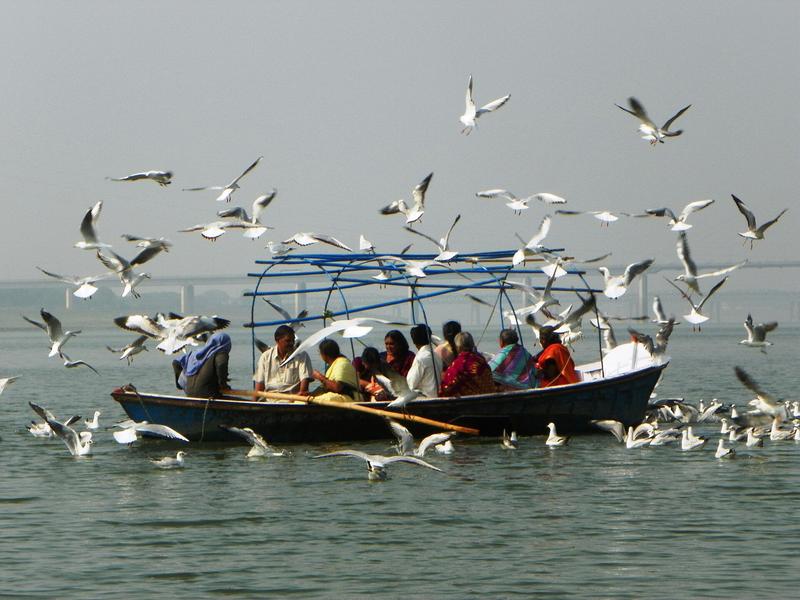
This six-day yatra connects them in one journey: a Sangam snan by boat during the Kumbh, the evening Ganga Aarti at Dashashwamedh Ghat and a sunrise boat ride in Varanasi, and Ram Lalla darshan in Ayodhya. It is our most complete Uttar Pradesh pilgrimage, and the one we recommend to families travelling a long way who want to make the most of the trip.
Who this yatra suits
- Families wanting a complete UP pilgrimage in a single trip.
- Devotees of Lord Rama and Lord Shiva, with darshan at both Ayodhya and Kashi.
- NRIs and visitors from far away, who may not return soon and want to see all three cities.
For a short trip focused on the Kumbh, choose the Sangam Snan Package.
When to go
The next Kumbh at Prayagraj is the Ardh Kumbh 2031, expected around January to March 2031, with official dates still to be announced. For this yatra we suggest:
- Avoiding the busiest bathing days, such as Mauni Amavasya, for the Prayagraj part of the trip, because roads in and out of the city are heavily controlled.
- Planning Varanasi and Ayodhya for weekdays where possible, when darshan queues are shorter.
- Packing warm clothes: January and early February mornings are cold and foggy across the region, and fog can delay road and rail travel.
This yatra can also be taken outside the Kumbh, at any time of year.
Your trip, in more detail
Day 1: arrive in Prayagraj. Pick-up from Prayagraj Junction or the airport, check in to your camp, and spend the evening at the Sangam.
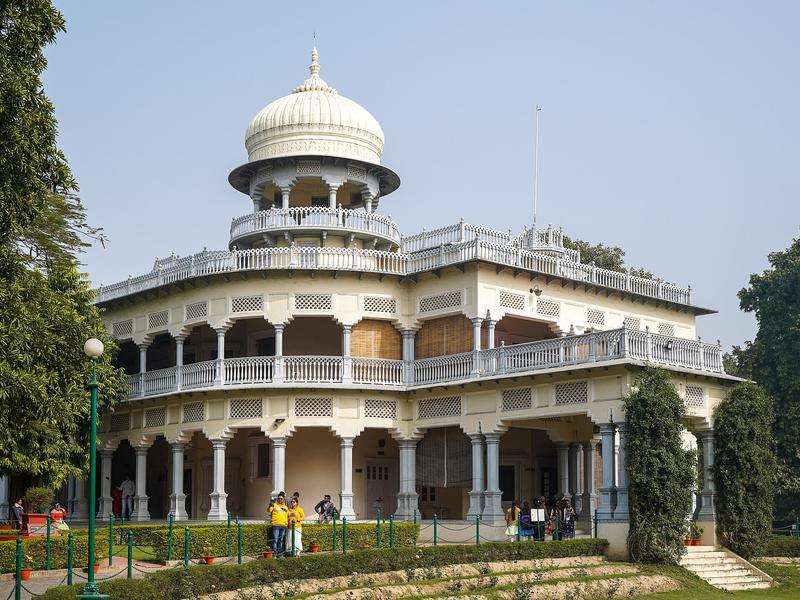
Day 2: Sangam snan and Prayagraj. An early boat to the confluence for your snan. In the afternoon, see Prayagraj's other sights, including Anand Bhavan, the former Nehru family home, now a museum, and the area around the fort.
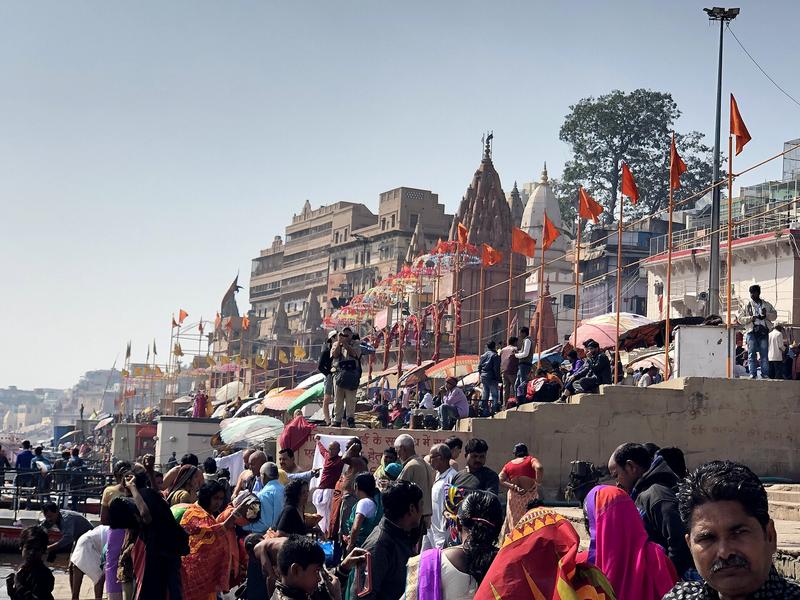
Day 3: to Varanasi. Drive to Varanasi, about 120 km. In the evening, watch the Ganga Aarti at Dashashwamedh Ghat, performed by a row of priests with great brass lamps, conches and bells. It is one of the most moving sights in India.
Day 4: Varanasi. A sunrise boat ride along the ghats, from Assi to Manikarnika, as the city wakes up. Then Kashi Vishwanath darshan through the Kashi Vishwanath Dham corridor. In the afternoon, an optional visit to Sarnath, where the Buddha gave his first sermon.
Day 5: Ayodhya. Drive to Ayodhya for darshan at the Ram Mandir and Hanuman Garhi, and time on the ghats of the Sarayu in the evening.
Day 6: departure. Drop at Ayodhya or Lucknow airport or station.
Where you stay
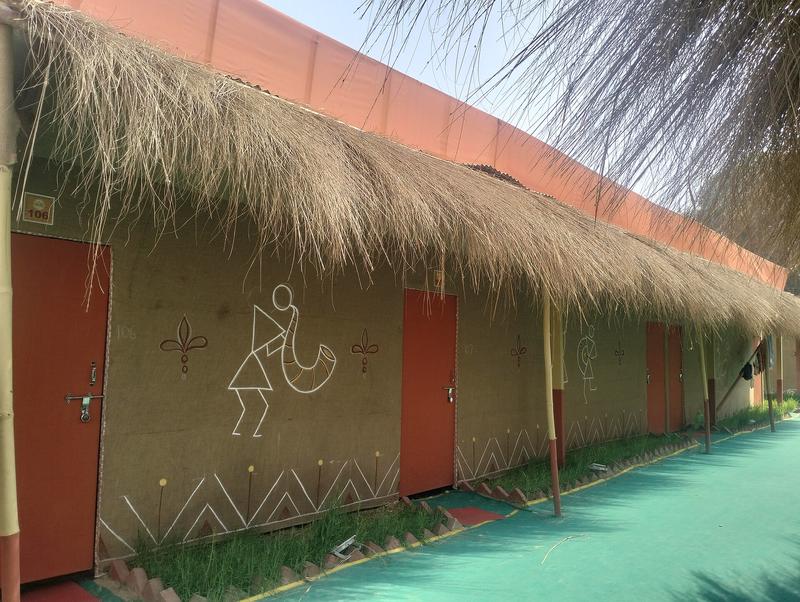
In Prayagraj you stay in our Deluxe Camp category in the mela, with attached bathrooms, heating and meals; you can upgrade to a Luxury Camp. In Varanasi and Ayodhya, where there is no Kumbh camp, we book comfortable hotels close to the main sites, chosen for easy access to the ghats and temples. We confirm every stay with photos before you pay.
What is included
- Five nights' accommodation with daily breakfast and dinner
- A private AC car throughout
- Boat rides in Prayagraj and Varanasi
- Planning help for darshan in Varanasi and Ayodhya
Not included: train or air fare, special darshan fees, and lunches.
How the price is worked out
This yatra is priced on request. The quote depends on your dates, especially whether you are in Prayagraj on a major bathing day, your stay categories, the number of travellers, and where you finish the trip. We confirm every stay, the itinerary and the final price in writing before you pay.
Good to know
- Long drives: there are three road transfers between the cities. We plan breaks and start early in fog.
- Phones and bags are not allowed inside some temples, including Kashi Vishwanath and the Ram Mandir. Carry only what you need and use the lockers provided.
- Dress modestly at all temples.
- Fog in winter can delay flights and trains, so keep your departure flexible if you can.
Varanasi: good to know
- The ghats are best seen from the water. A sunrise boat ride from Assi to Manikarnika, with the city waking up, is the classic way to see them.
- Manikarnika and Harishchandra ghats are cremation grounds. Watch quietly from a respectful distance and do not photograph cremations.
- The old city's lanes are narrow and crowded. Leave the car outside and walk or take a cycle-rickshaw.
- Kashi Vishwanath has strict security; phones, bags and leather items are usually deposited before entry.
- Try the city's food: kachori-sabzi for breakfast, malaiyo in winter and a Banarasi paan after dinner.
Ayodhya: good to know
Ayodhya has changed rapidly in recent years, with the new Ram Mandir, a redeveloped riverfront on the Sarayu and much better roads. Darshan at the Ram Mandir is free, and the temple sets visiting hours and entry rules that may change, so we confirm the latest before you travel. Hanuman Garhi, reached by a flight of steps, is traditionally visited before the Ram Mandir.
Adding Sarnath
Sarnath, about 10 km from Varanasi, is where the Buddha gave his first sermon after enlightenment. The Dhamek Stupa, the ruins of ancient monasteries and the site museum, home to the famous Lion Capital of Ashoka, make a peaceful half-day after the intensity of the ghats. Note that the museum is usually closed one day a week.