Planning your Haridwar Kumbh 2027: the complete guide
The Haridwar Kumbh is a three-month event, not a single day, and the right plan depends on who is travelling, how long you have and what matters most to you: the Amrit Snan processions, a calm family dip, rituals for ancestors, or simply being part of the world's largest gathering of faith. This guide brings together what we tell every family who calls us.
Choosing your month and snan day
The mela runs from 14 January to 20 April 2027, and each part of the season feels different.
- January and early February are cold, often foggy, with mornings around 5–8 °C. Crowds are lighter, except on Makar Sankranti (14 January) and Mauni Amavasya (6 February). Good for those who don't mind the cold and want a quieter Kumbh.
- Mid-February to mid-March is the heart of the Kumbh. Basant Panchami and Magh Purnima are followed by Maha Shivratri (6 March) and Phalgun Amavasya (8 March), the first two Amrit Snans. This is the busiest and most atmospheric time.
- April brings warm, pleasant days, the Hindu New Year (Nav Samvatsar, 7 April), the third Amrit Snan on Mesh Sankranti / Baisakhi (14 April) and Ram Navami the next day. A good month for families who prefer comfortable weather.
If you are travelling with elderly parents or young children, choose a major snan day or an ordinary day rather than an Amrit Snan. If seeing the akhara processions is the reason for your trip, plan around 6 March, 8 March or 14 April, and book early.
What a snan morning is really like
On major bathing days, Haridwar works very differently from normal.
- The evening before, police diversions begin. Private vehicles are stopped at parking areas on the edge of the city, and shuttle buses and e-rickshaws run to points near the mela.
- Before dawn, pilgrims walk the last stretch to the ghats. From many parking areas this is a long walk, which is why staying close to the mela matters so much.
- On Amrit Snan days, the akharas bathe first at Har Ki Pauri in a fixed order, and some ghats and roads are closed to the public during the procession.
- Through the day, the ghats stay crowded; most families take their dip early and return to rest.
Our guide to Amrit Snan in Haridwar and traffic and parking during the Kumbh go into detail.
The ghats and the mela area
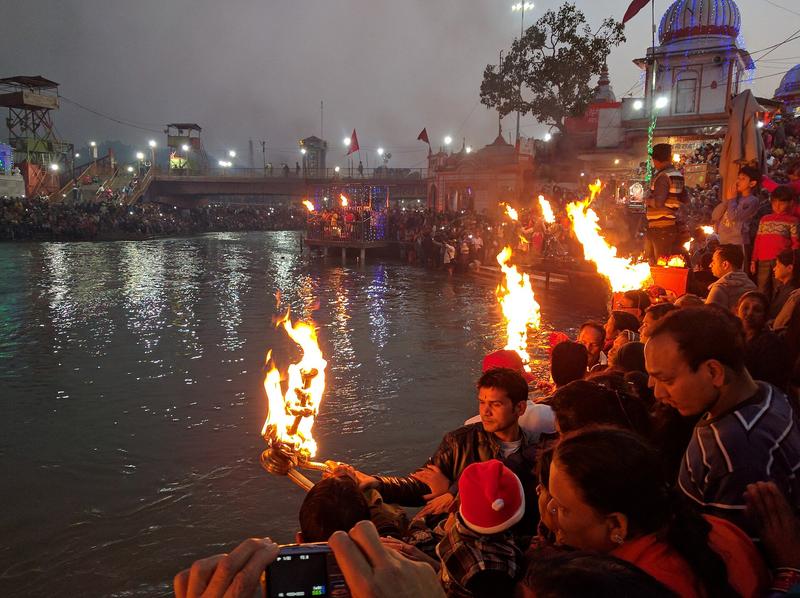
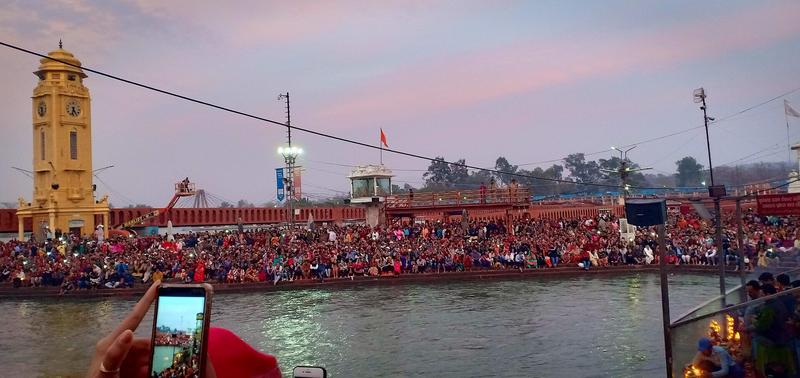
Har Ki Pauri and its sacred pool, Brahma Kund, are the centre of the Kumbh. This is where the akharas take their Amrit Snan and where the evening Ganga Aarti is held. But Haridwar has many ghats along the river and its canals, and during the Kumbh, bathing areas are extended for kilometres. On a crowded day your coordinator may take you to a nearby ghat that is just as sacred and far easier to reach. The tent city and akhara camps spread across both banks, and Kankhal, just south of the centre, is quieter and full of old temples and ashrams.
The akharas and their processions
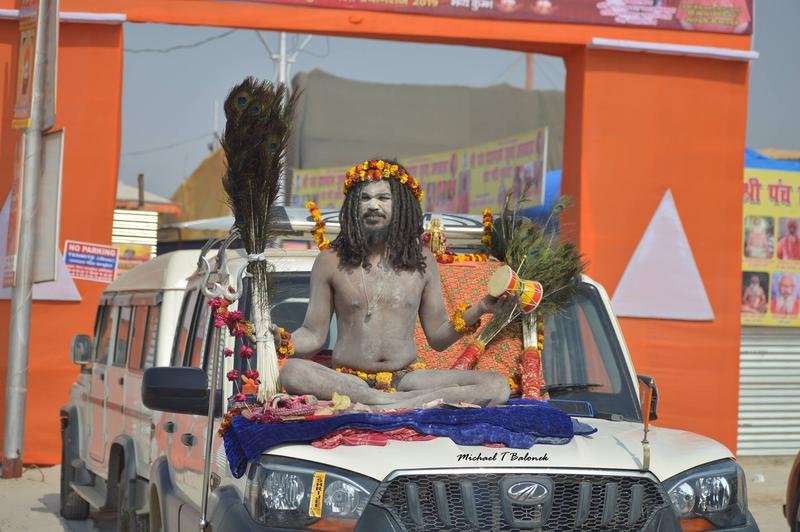
The Kumbh's most dramatic sights are the peshwai (the grand entry of each akhara into the mela) and the Amrit Snan processions. Naga sadhus, mahamandaleshwars on decorated chariots, bands and flags, in an order fixed by long tradition. Visiting the akhara camps during the mela, especially in the evening, is one of the most memorable parts of a Kumbh trip. Read about the akharas and Naga sadhus before you go.
Rituals for ancestors and family
Haridwar has a special place in the rites for the departed.
- Asthi visarjan, the immersion of ashes, is performed at the ghats with a priest. See our asthi visarjan guide.
- Pind daan and shraddh are performed at several ghats, including Kushavarta Ghat (guide).
- Genealogy registers: Haridwar's pandas keep handwritten family records going back generations, organised by home district. Many families visit to find or add their names (how it works).
Tell us when you enquire and we will arrange a trusted priest at the right ghat and time.
Where to stay
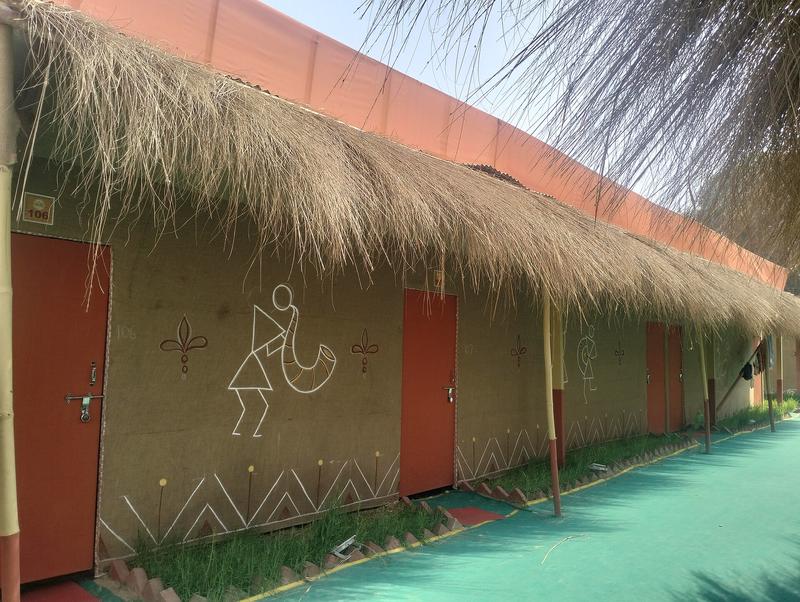
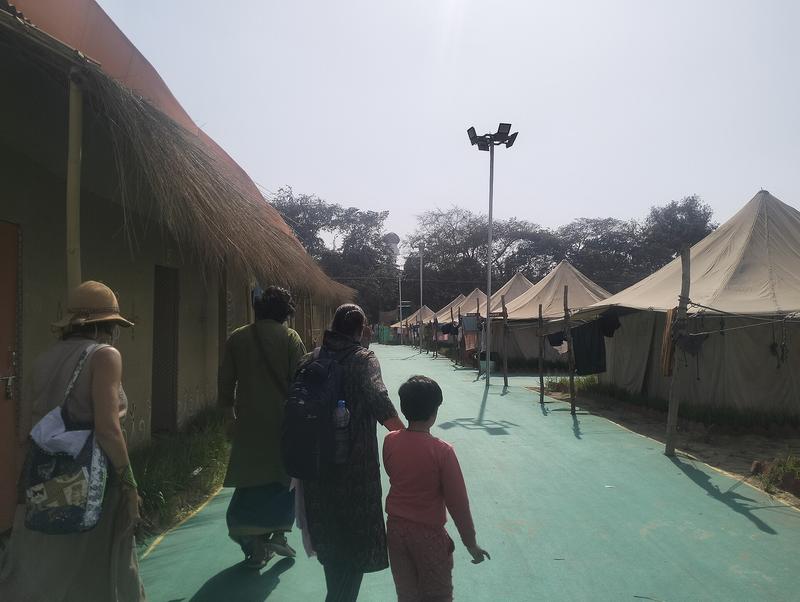
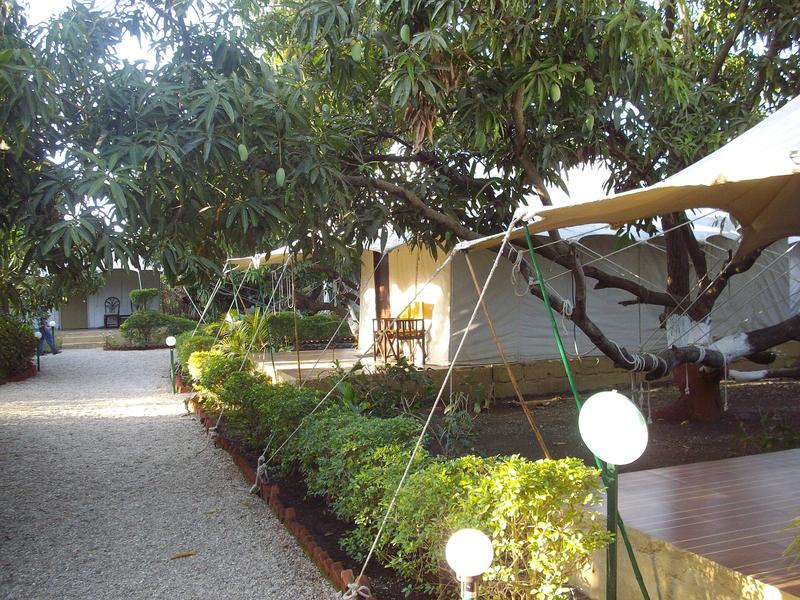
Walking distance to the ghats matters more than anything else on snan days. That is why we focus on camps inside the mela area:
Camp sites are allotted each season, so we confirm the exact camp, photos and walking distance before you pay. Read where to stay for the Haridwar Kumbh for a comparison of areas, including Rishikesh.
Sample itineraries
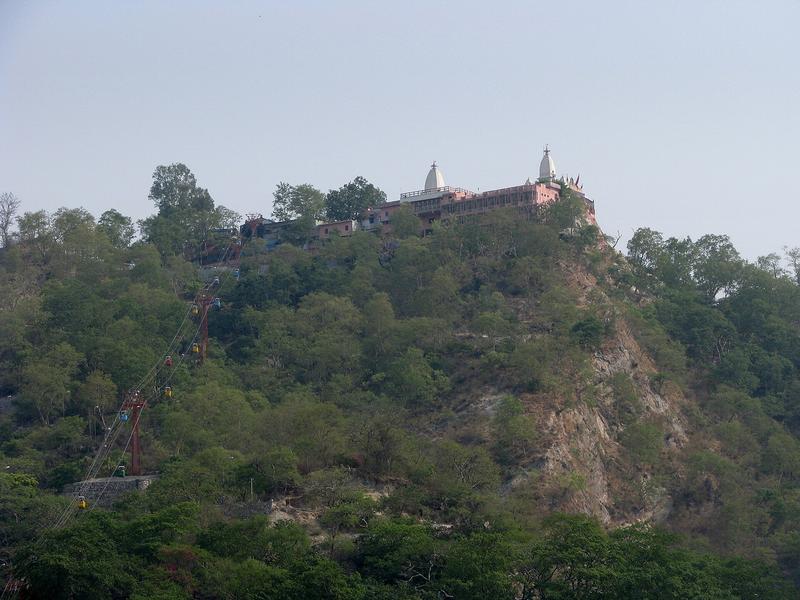
- 2–3 days: arrive, evening aarti, snan the next morning, Mansa Devi and Chandi Devi by ropeway, Kankhal, depart. See our Haridwar Kumbh Snan Package and 2–3 day itinerary.
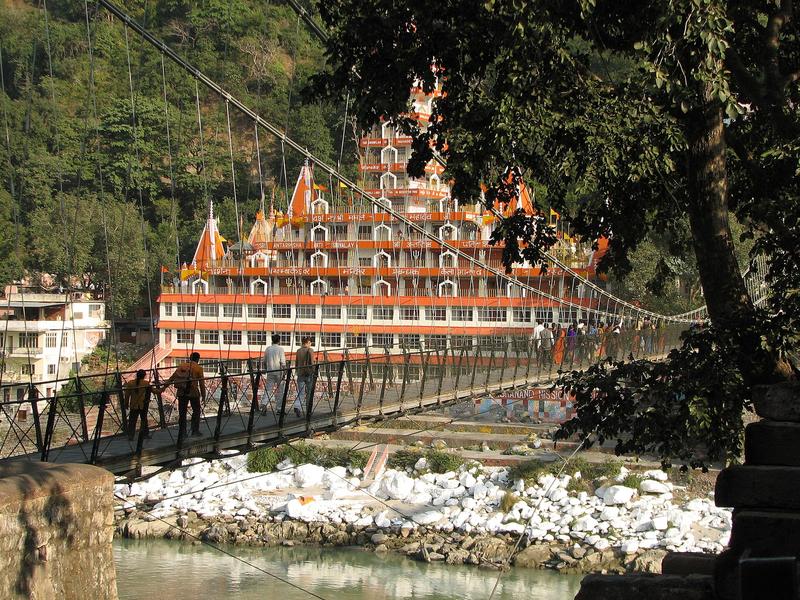
- 4 days: add a full day in Rishikesh with the Triveni Ghat aarti (package).
- 5 days or more: add Neelkanth Mahadev, a Rajaji National Park safari, or combine the Kumbh with the Char Dham season, which opens in late April or May.
Staying safe and well
- Agree a meeting point with your group; the clock tower at Har Ki Pauri is the classic one.
- Carry printed ID and your stay address; mobile networks slow down in crowds.
- Keep children close, and write your phone number on a card in their pocket.
- Use only recognised ghats with chains, and never go beyond them; the Ganga flows fast.
- Book only with operators who confirm in writing. Read how to spot fake Kumbh bookings.
What affects the cost of a trip
There are no fixed Kumbh prices: rates for camps change with dates, demand and availability. Your budget depends mainly on your snan date (Amrit Snan weeks cost the most), your stay category, the number of nights and travellers, and how you travel to Haridwar. Our budget guide explains each factor, and every package we offer is quoted for your exact dates.
 Luxury Camp