About the Nashik & Trimbakeshwar Simhastha Yatra
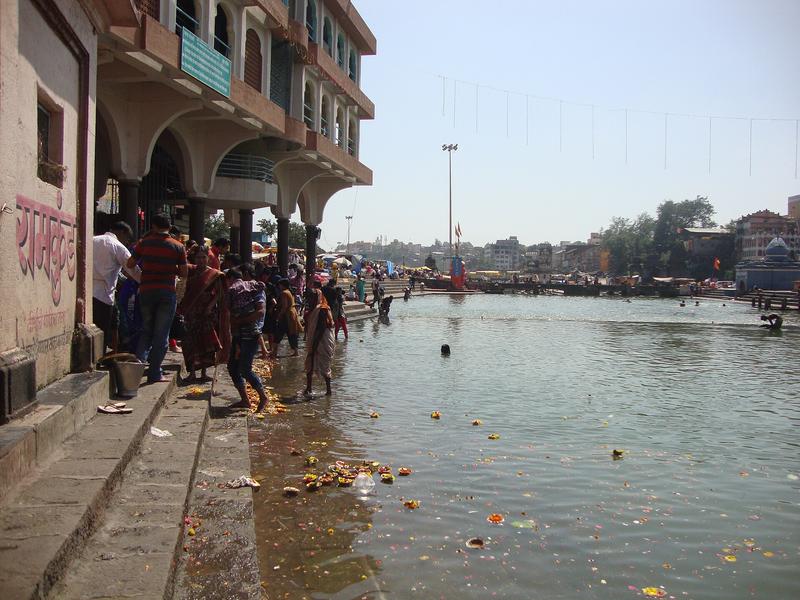
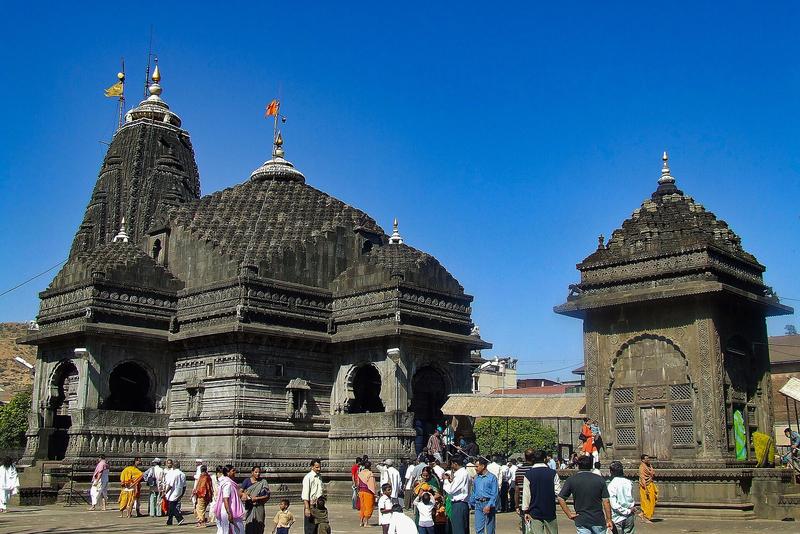
The Nashik–Trimbakeshwar Simhastha is the only Kumbh held in two towns at once. The Vaishnav akharas bathe at Ramkund in Nashik's Panchavati, while the Shaiva akharas bathe at Kushavarta Kund in Trimbakeshwar, about 28 km away at the foot of the Brahmagiri hills where the Godavari rises. Most pilgrims want to see both, and this four-day yatra is designed to do exactly that without rushing.
You take your snan at Ramkund, walk the Ramayana sites of Panchavati, and spend a full day in Trimbakeshwar for darshan at one of the twelve Jyotirlingas and a visit to Kushavarta. A coordinator plans the routes and timings around the Simhastha's crowd controls.
Who this yatra suits
- Families who want the complete Nashik Kumbh experience in one trip.
- Shiva devotees for whom Trimbakeshwar darshan is as important as the snan.
- Devotees of Lord Rama, as Panchavati is where Rama, Sita and Lakshmana are believed to have lived during their exile.
- Pilgrims from Mumbai, Pune and Gujarat, for whom Nashik is a short journey.
If you want to be in Nashik for one of the Amrit Snans and see the akhara processions, the Amrit Snan Special is built for that. To add Shirdi, see Simhastha with Shirdi & Pandavleni.
When to go
The Simhastha period opened with flag hoisting on 31 October 2026 and runs until 24 July 2028, but the main bathing season is the monsoon of 2027:
| Date | Occasion |
|---|---|
| 2 August 2027 | First Amrit Snan |
| 31 August 2027 | Second Amrit Snan (Shravan Amavasya) |
| 11 September 2027 | Third Amrit Snan, Nashik |
| 12 September 2027 | Third Amrit Snan, Trimbakeshwar |
This yatra works well on the days around the Amrit Snans or on ordinary days in August and September. If darshan at Trimbakeshwar matters to you, avoid putting your Trimbak day on an Amrit Snan or a Shravan Monday, when the queues are longest. Our Amrit Snan dates guide explains each date.
Your trip, in more detail
Day 1: arrival and the Godavari aarti. We pick you up from Nashik Road station or Nashik (Ozar) airport and take you to your camp. In the evening you walk with your coordinator to Ramkund for the Godavari aarti and a briefing on the next morning's route.
Day 2: Ramkund snan and Panchavati. An early start for your snan at Ramkund, the heart of the Nashik Kumbh. After breakfast, walk the Panchavati circuit, a cluster of sites linked with the Ramayana that are all within walking distance of each other:
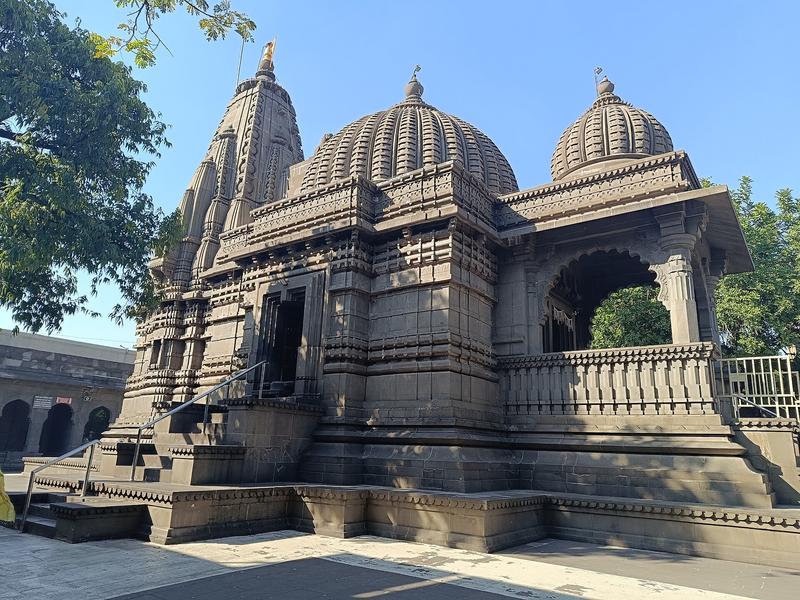
- Kalaram Temple, the black-stone temple of Lord Rama;
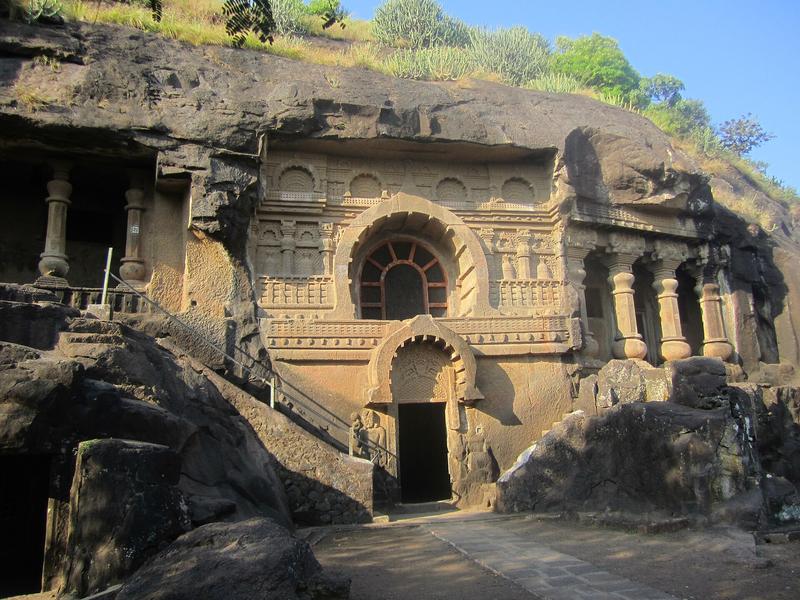
- Sita Gufa, the narrow cave where Sita is believed to have worshipped;
- the five banyan trees that gave Panchavati its name.
Our Panchavati Ramayana trail tells the stories behind each stop.
Day 3: Trimbakeshwar. We drive to Trimbakeshwar after breakfast. Darshan at the Trimbakeshwar Jyotirlinga, where the lingam has three faces representing Brahma, Vishnu and Shiva, can take time, so we plan the day around the queue. You also visit Kushavarta Kund, the sacred tank where the Shaiva akharas bathe. If you wish to perform a ritual such as Kaal Sarp shanti or Narayan Nagbali, we can arrange a purohit; read rituals at Trimbakeshwar first. You return to Nashik in the evening.
Day 4: departure. We drop you at Nashik Road, Nashik airport, or onward to Mumbai for an extra charge.
Where you stay
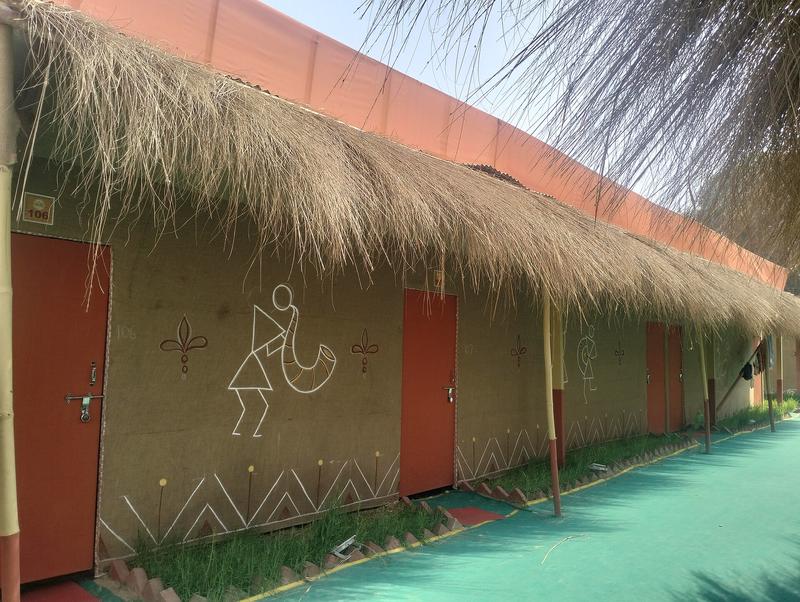
The yatra includes three nights in our Deluxe Camp category. Because the Simhastha's Amrit Snans fall in the monsoon, we only offer camps with raised floors, waterproof roofing and drainage. For more protection from the rain, upgrade to our Monsoon-ready Cottages or a Luxury Camp.
The Kumbh Mela Authority has allowed approved operators to run fully serviced tent cities for 2027, and we work only with approved operators. We confirm the exact camp, location and photos before you pay. Read our tent city guide to understand the options.
What is included
- Three nights' stay with daily breakfast and dinner
- A private car for all sightseeing, including Trimbakeshwar
- A coordinator on snan day
- Route and timing planning for darshan
Not included: train or air fare, special darshan or puja fees, lunches and Mumbai transfers. Darshan passes and ritual fees are paid directly to the temple or purohit, and we advise you on how to book them.
How the price is worked out
Every package is quoted for your dates. Your price depends on whether you travel near an Amrit Snan, your stay category, the number of travellers, and extras such as a Mumbai transfer or a ritual at Trimbakeshwar. We confirm the camp, photos and final price in writing before any payment.
Monsoon travel tips
- Pack for rain: a poncho, quick-dry clothes, a spare pair of footwear and a waterproof pouch for your phone and documents. See our monsoon packing list.
- Allow buffer time for road travel between Nashik and Trimbakeshwar; heavy rain can slow traffic.
- Wear footwear with grip on the ghat steps, which can be slippery.
- Keep medicines dry and carry a basic first-aid kit.
Our rain and crowd safety guide has more advice.
Planning the Trimbakeshwar day
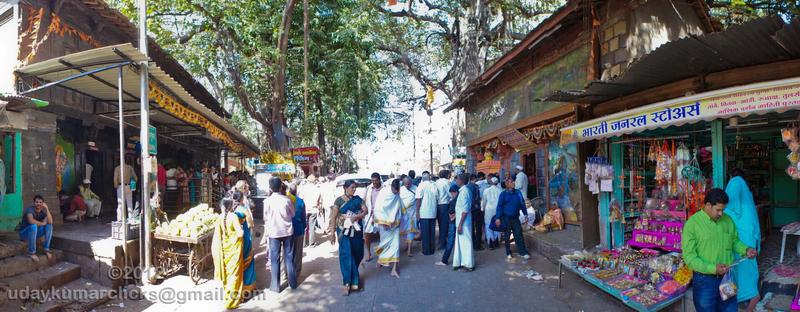
Trimbakeshwar is a small temple town, and on busy days its lanes fill quickly. A few things make the day smoother:
- Leave Nashik early. The 28 km drive is short, but parking near the temple fills by mid-morning on busy days.
- Decide on free or paid darshan in advance. The paid donation pass, booked through the temple's official channels, uses a separate queue.
- Dress traditionally if you plan to perform a ritual; purohits will tell you what is required.
- Visit Kushavarta after darshan, when the morning rush at the kund has eased.
- Carry a small bag only; phones and large bags may not be allowed inside the sanctum area.
If you would rather stay a night in Trimbakeshwar itself, read staying in Trimbakeshwar.